A microphone is an electro-acoustic transducer that converts sound signals into electrical signals. It is widely used in recording, communication, and acoustic measurement fields. The main types include dynamic, condenser, and electret microphones.
Definition and Working Principle
Core Function: Converts sound waves into electrical signals through diaphragm vibration. Output impedance is typically 200-600Ω (low impedance) or high impedance (requiring transformer matching).
Working Principle:
Dynamic: Sound waves drive the diaphragm, causing the voice coil to cut through a magnetic field, generating an induced electromotive force (electromagnetic induction principle). No external power supply is required.
Condenser: The diaphragm and a fixed electrode form a variable capacitor. Sound waves change the distance between the electrodes, causing a change in capacitance. Requires phantom power (48V-52V) and a preamplifier.
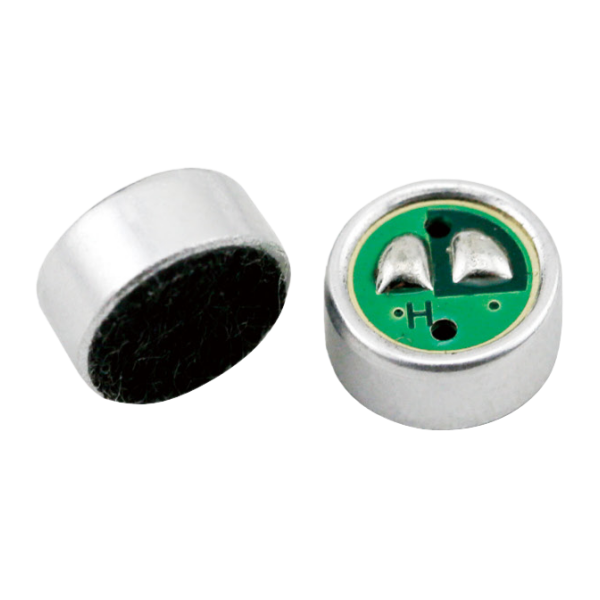
Electret: Uses a permanently charged material (such as polytetrafluoroethylene) instead of an external polarization power supply, and has a built-in field-effect transistor to improve sensitivity.
Main Type Classification
By Transduction Principle:
Dynamic: Robust structure, strong weather resistance, suitable for live performances and industrial environments (frequency response 50-15kHz).
Condenser: Wide frequency response (10Hz-20kHz), high sensitivity (>15mV/Pa), used for professional recording and acoustic measurement.
Electret: No polarization voltage required, small size, used in mainstream consumer electronics (such as mobile phone headsets).
By Functional Characteristics:
Wireless Microphone: Uses FM transmission of radio frequency signals, supporting mobile use (100-120MHz frequency band).
Noise-Canceling Type: Differential pressure type (near-field effect suppresses ambient noise) or contact type (picks up bone vibration), suitable for high-noise environments such as in vehicles.
Digital Microphone: Uses MEMS technology to output digital signals, resistant to electromagnetic interference (signal-to-noise ratio >55dB). Application Scenarios
Professional Audio: Recording studios use condenser microphones (such as stereo microphones) to capture multi-channel sound fields, with cardioid patterns to suppress crosstalk.
Industrial and Communications: In-car microphone arrays combined with noise reduction algorithms are used for voice command recognition; noise-resistant types are used for factory monitoring.
Consumer Electronics: Electret microphones are integrated into mobile phones and headphones, and MEMS microphones are suitable for smart home devices.